Heart over the scoreboard
The Journey CollectionHeart over the scoreboard is the belief that the deepest measure of football is not the final tally but the commitment brought to the field. In Travis McCoy’s understanding, effort, courage, loyalty, and collective resilience give the game its meaning. The principle first appears as guidance for young players, then becomes a standard by which Travis judges teams, careers, and himself: a scoreboard records an outcome, while heart reveals what people have endured and what they have given to one another.
Definition and Coaching Ethic
Travis defines playing with heart through the demands he places on the Clarendon Broncos. At the start of the season, he tells the players that he asks for “Time, passion, heart, and soul,” and connects those qualities to the burden carried by a team representing an entire community. Every Friday night, the boys step onto the field under hundreds of watching eyes. Public praise and criticism may change from play to play, but Travis insists that he knows why each player crosses the chalk line: the player has proved a willingness to give himself fully to the game.
His standard is deliberately exacting. The upperclassmen know that he will push them hard and expect “one-hundred and ten percent at all times.” He does not demand a sacrifice he has never made himself; he tells them that there is nothing he asks them to do that he has not done or is not willing to do again. The point is therefore not empty athletic discipline. Travis makes commitment reciprocal, presenting himself as accountable to the same demands he places on the boys. When he asks whether they are willing to make the same commitment, the team must decide whether belonging to the program is worth the cost of total effort.
The hesitant freshmen clarify the principle’s seriousness. Travis has watched them play in junior high and knows they possess talent, but talent alone has not taught them to give the game everything they have. Some will step forward and some may quit, and he will not condemn those who cannot make such a demanding commitment. Heart is not treated as a vague feeling that everyone automatically possesses; it is demonstrated through a choice to remain, work, and endure when the workouts become difficult.
The Scoreboard Versus the Game’s Meaning
For Travis, winning remains important, but it is not the final definition of success. He tells the players that if they push themselves to do their best, they will be winners at the end of the season, regardless of what the scoreboard or win-loss record says. This does not erase competition. Instead, it relocates victory from the narrow result of a single game to the fuller experience of having invested everything in the team. The distinction becomes especially important for players facing criticism, injury, fatigue, or the limits of their own ability.
The same logic shapes the community’s treatment of the Broncos during Homecoming. The football players enter the gym to the fight song, lead the crowd through the Pledge of Allegiance, and stand within a ceremony that includes The Star-Spangled Banner and chants for the evening’s game against the Gruver Greyhounds. The rivalry is historic and emotionally charged; in earlier years, Clarendon even burned a papier-mâché figure of a Gruver player at the bonfire. A drought cancels that year’s bonfire, but not the communal spirit surrounding the contest. The rituals make the game larger than the players, yet Travis’s message keeps the meaning from collapsing into spectacle or victory alone.
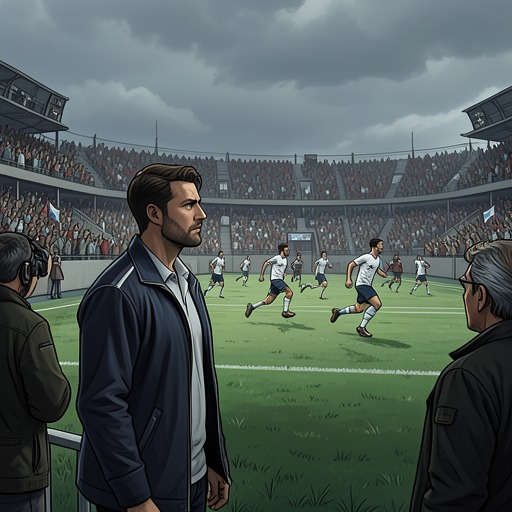
When Travis leads the Broncos onto the field, the crowd’s response changes his understanding of home. He has stood in larger stadiums before thousands of people, but the roar surrounding the Clarendon players matters more because it carries the loving embrace of belonging. He tells the boys that the cheering is for them because they have worked hard and earned the community’s respect. Whether they win or lose that night, the community’s faith is not wasted; the players have already received recognition for becoming men under the pressure placed upon them.
Heart Tested by Adversity
The concept receives its clearest explanation after the Broncos defeat the Wellington Skyrockets in a difficult game. Travis describes the players as sore and tired and admits that he had been nervous they would fail to pull out the win. Wellington possessed greater size and speed and had fewer injuries, so the Broncos appeared to be at a material disadvantage. A loss would not have eliminated them from the playoffs, but it would have shaken the seniors, who had been freshmen when Travis arrived and had learned the game alongside him through repeated battles.
The decisive fact is stated simply: the Broncos had heart. Travis explains that without heart, football is merely a game, but with heart, it becomes life. The players have fought through challenges that would cripple ordinary teams, and their unexpected victory proves not that they are invulnerable but that hardship has developed their capacity to persist. Their resilience becomes a form of knowledge. They have learned that size, speed, and injury do not completely determine what a team can do when its members refuse to surrender their shared purpose.
Aaron Johnson embodies this tested version of heart. After breaking the fifth metatarsal in his right foot during his freshman season, he suffered the same break again while preparing for baseball. Delayed treatment, surgery, and recovery erased his entire freshman year, forcing him to watch from the sideline. When his sophomore season began, however, Aaron returned in better condition than many teammates and determined to prove that he deserved to start at lineman. Travis recognizes him as a natural leader who can ignite the underclassmen. Heart therefore includes recovery from absence: the player’s value is not only in uninterrupted performance but in the will to return after bodily loss and disappointment.
Travis McCoy’s Personal Measure
Heart over the scoreboard also governs Travis’s decision to leave professional football. Six years with the Miami Sharks have made him famous enough that passengers on his delayed flights from Miami through Dallas to Amarillo ask him to sign newspapers, magazines, and even barf bags. The Sharks were near a national championship the previous season and were favored to win the next one, yet Travis’s separated shoulder means that he may not even be able to stand on the sidelines and watch. The contrast between public expectation and private limitation exposes the inadequacy of measuring a life through athletic status.
When Stewart Thornton, the Sharks’ owner, offers Travis a coaching position after confirming that his shoulder will never be strong enough for him to play again, Travis must choose between remaining inside the professional world that formed his identity and returning to the family he has found in Texas. He acknowledges that football had been his life since childhood, that he once slept with a football, and that his career contained more wins than losses. Still, he says he cannot continue in the same way. Going home has shown him that his future is with Penelope Stone and Max, with people who love him and need him. Declining the offer becomes an application of the principle he teaches: the most important victory is not preserving a public record but recognizing what deserves his full time, passion, heart, and soul.
His farewell to the Sharks carries the same tension. Thinking of Penelope and Max, Travis tells his teammates that he is happy, even though he will miss them, because they had supported him through a great deal. He refuses to treat departure as proof that the years with the team meant nothing. Instead, he honors that shared history while accepting that it is time to move on. Heart permits continuity without stagnation: Travis can love the Sharks and still leave them.
Community, Ritual, and Legacy
The principle links private feeling to public ritual. At a Clarendon pep rally, Travis prays with the players after Cody asks him to lead the Lord’s Prayer. The boys kneel, repeat the prayer with him, and then run through the inflatable tunnel as the band plays the fight song. At the game, the captains meet at midfield for the coin toss, and Travis murmurs encouragement as the Broncos prepare to begin. These moments place football beside prayer, national symbols, music, and civic gathering, presenting the team as a vessel for communal identity rather than merely an athletic organization.
That communal meaning is why Travis’s return matters even before the result of a game is known. At the fifty-yard line, he tells the players that the crowd’s noise belongs to them because their labor has earned it. His words transform spectatorship into a relationship of obligation: the community offers belief, while the players answer with effort and courage. The boys are still young, but Travis sees them carrying the hearts of men and the courage of an entire community.
The same idea survives as Travis’s coaching legacy. Three years into his tenure, thirty-two boys attend football tryouts, the largest turnout the Broncos have had during his coaching period. Not all will remain: some may be injured, some may quit, and some may fail to keep up their grades. The program’s success is therefore not reducible to enrollment or a championship record. Its deeper achievement is teaching young people how to commit themselves, how to withstand disappointment, and how to understand that character is revealed when external measures become unfavorable.
In the end, heart over the scoreboard is both a football philosophy and a narrative correction. It counters the professional game’s emphasis on fame, championships, and physical usefulness with a broader account of value grounded in belonging and responsibility. Travis’s career once seemed to culminate in stadiums and winning records; his later life shows that the same intensity can be redirected toward coaching, family, and home. The scoreboard can announce who won a contest, but heart explains why the contest mattered, what the players survived, and how their effort continues after the lights go out.